Here are the numbers that matter: 3 to 5 drops in an ultrasonic diffuser, a 2% dilution (4 drops per 10 ml of carrier oil) for anything that touches skin, 20 to 25 drops in a 100 ml linen spray, 2 to 5 drops per 500 ml of sauna water depending on the oil, and a cool, dark cupboard for storage. Essential oils are concentrated, so nearly every bad experience with them is a too-much experience. The rest is detail: exact amounts per use, the cleaning and storage habits that keep everything fresh, and the safety rules worth reading once.
Diffusing: exact drops for your room
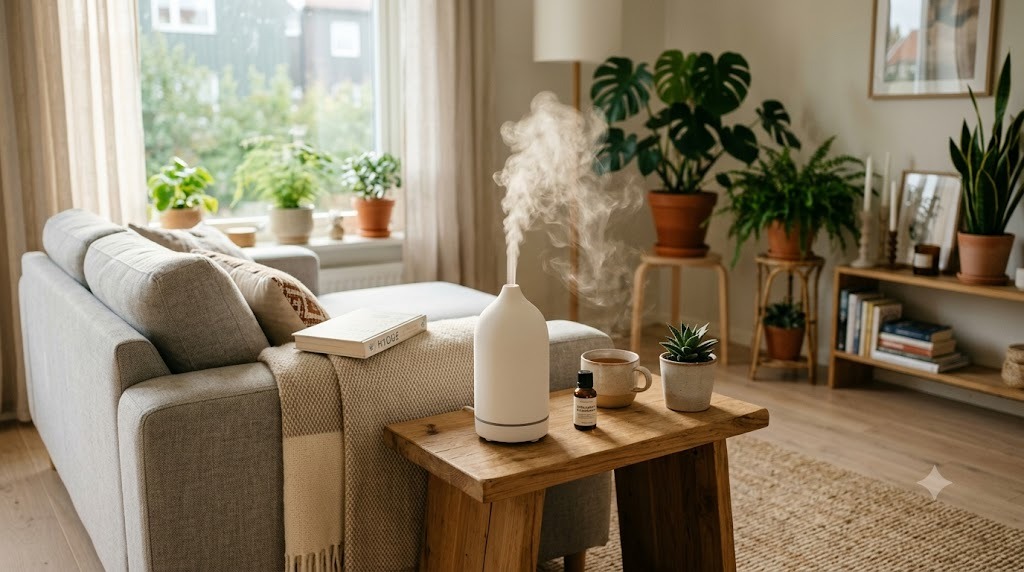
Fill an ultrasonic diffuser to its water line with room-temperature tap water, then add oil by room size:
- Small room (bedroom or office, up to about 15 square metres): 3 to 4 drops.
- Medium room (living room, 15 to 25 square metres): 4 to 5 drops.
- Large or open-plan space: 5 to 6 drops, or move the diffuser closer to where you sit.
Run it in sessions of 30 to 60 minutes rather than all day. Your nose adapts to a constant scent within half an hour; a scent that comes and goes registers far more. Start at the low end with assertive oils - eucalyptus, peppermint and tea tree can fill a room on 3 drops. Softer choices like lavender or cedarwood forgive an extra drop.
Cleaning the diffuser
Tip out leftover water after each use and wipe the reservoir dry - standing water is where that stale, slightly sour smell comes from. Once a week, run it for five minutes with water and a teaspoon of white vinegar, then rinse and wipe the ultrasonic plate with a cotton swab. Resin-rich oils such as pine and spruce leave more film than citrus, so clean more often if you lean on forest scents.
Dilution: the table to bookmark
Essential oils are too strong for bare skin. Dilute them in a carrier oil - jojoba, sweet almond or fractionated coconut. A standard drop is roughly 0.05 ml, which makes the maths per 10 ml of carrier simple:
| Dilution | Drops per 10 ml carrier | Typical use |
|---|---|---|
| 0.5% | 1 drop | Facial use, sensitive skin, first trials |
| 1% | 2 drops | Daily body oil, large areas, long wear |
| 2% | 4 drops | Standard body and massage blends - the everyday default |
| 3% | 6 drops | Short-term use on small areas, wash-off products |
When in doubt, 2% is the sensible default for adults - scale it to 12 drops per 30 ml if you mix larger batches.
Patch test before anything new
Mix a single drop at your intended dilution, apply it to the inside of your forearm, and leave it for 24 hours. Redness, itching or stinging means that oil is not for your skin at that strength. The test takes 30 seconds; skipping it is how people decide they hate an oil that was simply used too strong.
A linen and room spray that actually mixes
Oil and water separate, so a spray needs help or it will spit neat oil onto your fabrics. For a 100 ml spray bottle:
- Add 20 ml of unscented alcohol (plain vodka works) or witch hazel.
- Add 20 to 25 drops of essential oil and swirl until fully mixed.
- Top up with about 80 ml of water.
- Shake before every use and mist from about 30 cm away.
For linens, lavender with a few drops of cedarwood is the classic; for rooms, lemon with a drop of pine smells like a house that cleans itself. Test a hidden corner of any fabric you care about first, and keep sprays off silk. A couple of drops on a cotton pad tucked into a drawer does the same job with zero risk.
Baths: dissolve first, always
The most repeated myth in home aromatherapy is that salt or milk will disperse essential oil in bathwater. Neither does. Undissolved drops float on the surface and land on your skin neat, exactly where the water sits warmest. Mix 3 to 5 drops into a tablespoon of carrier oil or a proper solubilizer first, then add that to the tub.
Sauna: different rules, one link to keep
Sauna dosing is its own topic because heat amplifies everything. The short version: never put essential oil neat on the stones - always dilute it in about 500 ml of water in the ladle bucket first. Mild oils such as pine, spruce and lavender take 3 to 5 drops per 500 ml; sharp ones like eucalyptus, peppermint and tea tree take 2 to 3; camphor and oregano stay at 1 to 2. The full method is in our sauna dosage guide; for choosing a scent, see birch, pine or eucalyptus and the complete sauna scent guide. Fragrance oils are a different product entirely - here is why they stay out of the ladle.
Storage: cool, dark, closed
Light, heat and oxygen are what age an oil. Keep bottles tightly capped, upright, in a cupboard or drawer away from radiators and windowsills, and write the date on the label when you first open one. Citrus oils such as lemon and bergamot oxidise fastest - use them within about a year of opening - the scent flattens and oxidised citrus is more likely to irritate skin. Woods and resins like cedarwood and pine hold for two to three years. If an oil smells thin, sour or just wrong compared to the day you bought it, retire it to cleaning-spray duty.
Safety: the block to read once
- Never ingest essential oils. Not in water, not in tea, not a single drop.
- Children: store bottles out of reach, and be cautious diffusing strong oils - peppermint, eucalyptus and camphor in particular - around young children. Consult a specialist before any regular use in a child's room.
- Pets: tea tree is toxic to cats and dogs, and many oils are unsafe around cats in general. Diffuse only in ventilated rooms your pet can leave, and never apply any essential oil to an animal. When unsure, ask your vet.
- Pregnancy and breastfeeding: consult a specialist before using essential oils regularly; several common oils, including clary sage, are routinely flagged here.
- Sun: bergamot and lemon are photosensitising on skin. After any leave-on product containing them, keep that skin out of strong sunlight.
- Camphor and oregano: potent even by essential oil standards - tiny doses, strong dilution, and never anywhere near mouths.
None of this is a treatment plan. Essential oils are a scent - traditionally valued and genuinely pleasant, but a scent, not a medicine. For any health question, talk to a specialist.
FAQ
Q: How many drops should I put in my diffuser?
A: 3 to 5 for most rooms - 3 to 4 in a bedroom or office, 4 to 5 in a living room, up to 6 in a large open space. You can always add a drop; you cannot take one out.
Q: Can I mix essential oils with just water for a spray?
A: No - oil does not disperse in water alone. Mix the drops into unscented alcohol or witch hazel first, then add the water, and shake before each use.
Q: How long do essential oils keep?
A: Stored cool, dark and tightly capped, most stay true for one to three years. Citrus oils fade first and are best used within a year of opening; woods like cedarwood and pine last longest.
Q: What is the safest dilution for skin?
A: Around 1% (2 drops per 10 ml of carrier oil) for daily use, and 2% (4 drops) as the standard body-oil default. Patch test on your inner forearm for 24 hours before using any new oil.
Still choosing your first bottles? Take the two-minute scent finder quiz, browse the full collection, or go deep on a single oil with the lavender guide.
Leave a Reply